Nadia
Anxious PeopleNadia’s life is shaped by a bridge she once stood on, the boy who pulled her back from its edge, and the work she later chose to do for people in pain. Her story moves from an adolescence marked by loneliness and concealed distress to a career as a psychologist; a decade later, the past returns through Zara, a patient who has watched Nadia’s life from afar and needs help facing what she has kept hidden.
Identity and Background
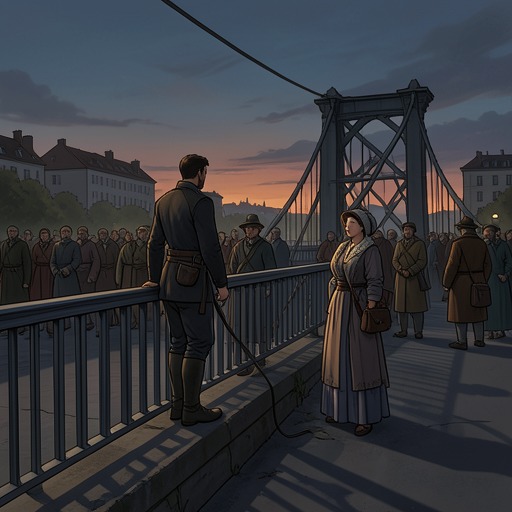
As a teenager, Nadia was persistently sad without being able to explain why. She felt unseen at home, including at the family dinner table, and could not make sense of the distress she experienced. Rather than tell her parents what was happening, she had learned to conceal it and say what she thought other people needed to hear. One day she stayed away from school, spent the day in town, and eventually found herself on the bridge where Man on the bridge had died by suicide the week before. His death had become a subject of conversation at the school Nadia and his children attended, but she knew little about him personally.
Jack, then a teenage boy, came to the bridge after returning there night after night in the week following the death. He pulled Nadia down from the railing, and she later woke in hospital. When questioned, she said she had climbed up to photograph the sunset and fallen. Her explanation concealed her distress from the nurses as effectively as it had from her family. She could not know what she would have done if Jack had not intervened, and that uncertainty stayed with her. Unlike Jack, who remembered the rescue as the beginning of his determination to become a police officer, Nadia never saw him again at the time and sometimes wondered whether she had imagined him.
From Survival to Psychological Practice
Nadia did not return to the bridge after leaving hospital. In the years that followed, she tried to understand what distinguished her from the man who had died there. That unresolved question helped shape her choice of profession and the life she built: she trained as a psychologist and came to work with people in acute emotional pain, meeting them as someone who knew what it was like to feel close to an edge and believed there was a way back.
Her work does not mean that her own anxiety and loneliness disappear. Nadia learns ways of living with them, rather than imagining she can simply be free of them. One principle she draws from that experience is to treat people kindly, even when they are difficult, because their burdens may not be visible. She also recognizes that the question of whether a person is good is widely shared. In her view, people generally want to be kind, even though living up to that wish can be difficult.
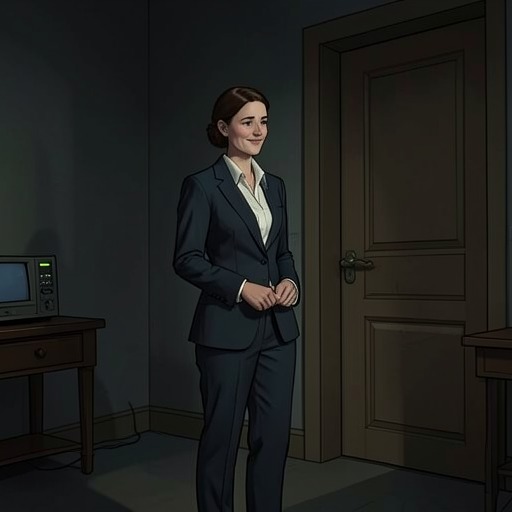
Ten years after the bridge episode, Nadia moves back to her town after completing her training. She becomes Zara’s psychologist, not knowing that Zara’s connection to her began on the night of the rescue. Their professional relationship brings Nadia into contact with a patient who is far more guarded, and far more closely tied to Nadia’s own past, than she first understands.
Her Work with Zara
At one of their final sessions before the hostage crisis, Zara arrives earlier than usual. Nadia notices the change and asks whether anything has happened. In later conversations, she considers Zara’s question about antidepressants carefully. She explains that such medication can soften both sadness and happiness, and says she has not recommended it because she does not think Zara needs fewer feelings. Nadia’s assessment is that Zara is lonely, not depressed.
Nadia also challenges Zara’s reluctance to let people close. She believes Zara fears hurting others more than being hurt herself, and sees her as more empathetic and moral than she admits. Zara is offended by this reading, unsure whether it is the suggestion of weakness or the suggestion of morality that troubles her. Nadia nevertheless tries to offer a practical opening: she writes down the name of a good pair of headphones, hoping music might help Zara leave the house, meet people, and try something new. Her suggestion is an invitation, not a demand that Zara fall in love.
The exchange shows Nadia using professional knowledge without reducing Zara to a diagnosis. She speaks about feelings, loneliness, and connection, while allowing for uncertainty and for Zara’s resistance. Later, Nadia recalls that she never gave Zara a satisfactory explanation of panic attacks. Asked if she has a better one now, she admits she does not. What she can offer instead is the conviction that talking helps, and that anxiety is often hard to disclose because invisible distress may draw less sympathy than an outwardly familiar excuse. Her answer places shared experience and conversation alongside clinical expertise.
The Bridge, Zara, and Jack
Nadia does not know that Zara has carried a letter connected to Man on the bridge for ten years. Zara saw Nadia on the railing and Jack rushing to rescue her, but was too frightened to intervene. After the ambulance took Nadia to hospital, Zara found her wallet and learned her name. From then on, Zara followed Nadia’s education and developing career at a distance, often looking for apartments with balconies that overlooked the bridge. Nadia, meanwhile, did not know that the person sitting across from her in therapy had witnessed the most consequential moment of her adolescence.
The truth begins to surface when Zara comes to Nadia’s office holding the letter. She asks whether Nadia likes her work and whether she is happy. Nadia answers that she is happy enough, though not all the time, and says she has come to believe in the work for reasons beyond being good at it. Zara eventually lets the envelope go. Nadia opens it and finds a four-word message that tells Zara the bridge rescue was not her fault. The letter gives their therapeutic relationship a new context: Zara has come not only as a patient, but as someone seeking help to face what she witnessed and the guilt she has carried.
In spring, a letter brings Jack to Nadia’s office. Zara has recognized him at the police station and arranged for him to receive the address, a photograph of the bridge, and a sealed note for Nadia. When he appears, Nadia does not initially know who he is. Jack recognizes her at once; ten years have passed, but he has not forgotten the girl he pulled from the railing. Nadia asks if he was the boy on the bridge, and he confirms it. Their reunion gives both of them the recognition they lacked after the rescue: Nadia learns who acted, and Jack sees the person he had not encountered again since that night.
Care Beyond the Consulting Room
Nadia’s support for people affected by suicide also extends beyond her individual practice. She attends a summer camp each year for children who have lost a family member to suicide. A photograph in her office shows her with the children, all wearing matching shirts for the organization that funds the camp. Its purpose is to let children share the experience of loss so they do not have to bear guilt, shame, and silence alone. Nadia listens, talks, and makes room for laughter; the work gives practical form to her belief that support can begin with one person and one conversation.
The final scenes place this work beside Nadia’s ordinary ties. On a snowy day she speaks by phone with her father, who calls her affectionately in his homeland’s language and worries about her driving to visit him. The call presents her not just as a psychologist but as a daughter whose father still wants to care for her. Soon afterward, Jack arrives at her office, and the old rescue becomes a present relationship rather than a story each of them has held alone. Zara’s own final act also supports Nadia’s work: after leaving her job and giving away her fortune, Zara makes a donation to the organization behind the camp, helping it continue for years. Nadia’s arc thus joins personal survival to ongoing care—not as a claim that one rescue resolves everything, but as a chain of attention, connection, and support that reaches beyond the bridge.